Belfast is one of the easiest cities in Ireland to explore in a short break. It has Titanic history, political murals, Victorian architecture, lively pubs, food markets, museums, neighbourhoods, waterfront walks and simple day trip options from the city.

If you are visiting for the first time, this guide covers the best things to do in Belfast, how to make sense of the city, and when a sightseeing tour can help you see more without spending the day working out routes.
Belfast is also a strong base for exploring more of Northern Ireland, including the Giant’s Causeway, Causeway Coast, castles, coastal viewpoints and Game of Thrones filming-location scenery.
Things to Do in Belfast: Quick Summary
| Best Overall Belfast Experience | City sightseeing, Titanic Quarter, murals, Cathedral Quarter and local food or pubs |
|---|---|
| Best For First-Time Visitors | A Belfast sightseeing tour followed by time in the city centre |
| Best Historic Attraction | Titanic Belfast and the Maritime Mile |
| Best For Local Character | Cathedral Quarter, St George’s Market and traditional pubs |
| Best For Political History | Belfast murals, Peace Wall areas and guided local commentary |
| Best Add-On Day Trip | Giant’s Causeway and Causeway Coast |
| Typical Time Needed | One full day for city highlights, two or more days if adding a day trip |
What Are the Best Things to Do in Belfast?
The best things to do in Belfast include Titanic Belfast, the Maritime Mile, Belfast City Hall, the Cathedral Quarter, St George’s Market, Crumlin Road Gaol, political murals, local pubs, live music, shopping streets and city sightseeing routes.
For a first visit, it is best to mix the city’s major attractions with time to experience its neighbourhoods and local character. Belfast is not just a checklist city. A lot of its appeal comes from understanding the stories behind the streets, buildings and communities.
A city sightseeing tour can be useful early in your visit because it helps you understand the layout of Belfast and decide where you want to spend more time afterwards.
1. Titanic Belfast and the Maritime Mile
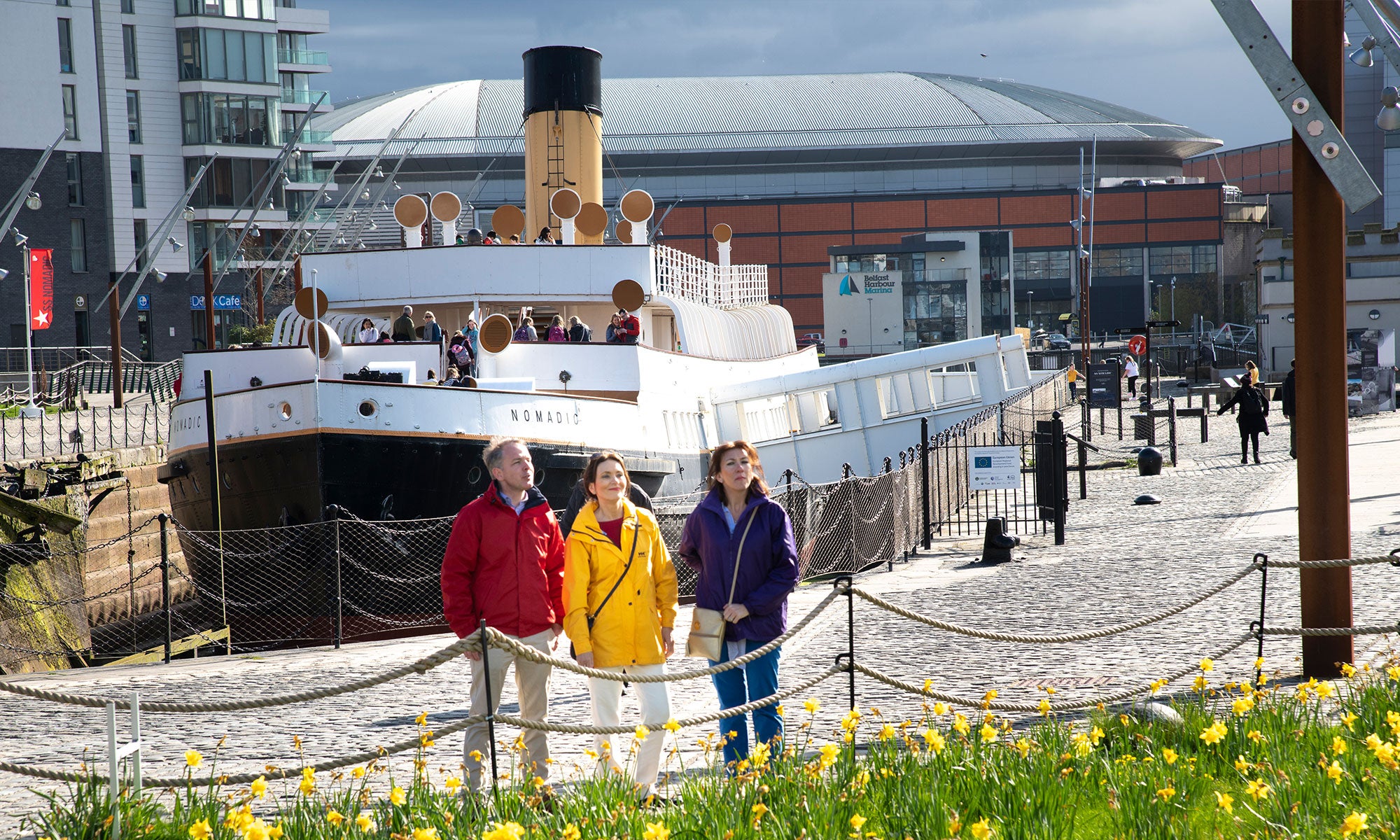
Titanic Belfast is one of the city’s best-known attractions and a major reason many visitors come to Belfast. It sits in the Titanic Quarter, close to the slipways where RMS Titanic was built.
The wider Maritime Mile is also worth exploring, especially if you enjoy waterfront walks, shipbuilding history and modern Belfast regeneration.
This area works well for first-time visitors because it gives a clear sense of Belfast’s industrial past and how the city has changed.
Titanic Quarter can be visited independently, but it also fits naturally into a wider Belfast sightseeing day if you want to understand where it sits in relation to the city centre, River Lagan and other attractions.
2. Belfast City Hall
Belfast City Hall is one of the most recognisable buildings in the city centre. Its dome, gardens, statues and central location make it a useful starting point for exploring Belfast on foot.
The area around City Hall connects easily with Donegall Place, shopping streets, cafés, hotels, restaurants and nearby city centre landmarks.
Even if you only stop for photos outside, City Hall is worth seeing because it helps visitors understand the scale and confidence of Belfast during its industrial growth period.
3. Belfast Murals and Political History
Belfast’s murals are among the most talked-about parts of the city. They reflect history, identity, politics, community memory and the city’s more recent past.
Visitors should approach these areas with respect. They are not just street art or photo backdrops; they are part of living neighbourhoods with complex histories.
A guided or narrated route can be helpful here because the context matters. Understanding what you are seeing is often more valuable than simply passing the murals quickly.
For many visitors, this is one of the most memorable parts of Belfast because it shows a side of the city that is very different from the Titanic Quarter or shopping streets.
4. Cathedral Quarter
The Cathedral Quarter is one of Belfast’s best areas for atmosphere, food, pubs, street art, music and evening plans.
It is a good place to visit after a day of sightseeing because it has a more relaxed feel than the main shopping streets and offers plenty of places to stop for a drink or meal.
Visitors often come here for cobbled streets, colourful entries, traditional pubs, live music and a sense of Belfast’s creative side.
If you are staying overnight in Belfast, the Cathedral Quarter is one of the easiest areas to include in your evening.
5. St George’s Market
St George’s Market is one of Belfast’s most popular places for food, local produce, crafts and weekend atmosphere.
It is a good stop for visitors who want something more local and informal than a museum or landmark. Depending on the day, you may find food stalls, music, gifts, produce and local makers.
It works especially well in the morning or around lunchtime, before continuing to the city centre, Cathedral Quarter or waterfront.
6. Crumlin Road Gaol
Crumlin Road Gaol is one of Belfast’s strongest historic visitor attractions. It gives insight into prison history, court connections, political history and some of the darker chapters of the city’s past.
It is best suited to visitors who want more than surface-level sightseeing and are interested in Belfast’s social and political story.
The attraction is indoors, which also makes it a useful option when the weather is poor.
7. Belfast Pubs, Food and Live Music
Belfast has a strong pub and food scene, from traditional bars and live music venues to modern restaurants, cafés and casual food spots.
A good Belfast visit should leave time for this side of the city. Some visitors focus only on attractions and miss the everyday character that makes Belfast enjoyable.
The Cathedral Quarter, city centre, Linen Quarter and areas around Queen’s Quarter all offer different kinds of food and drink experiences.
If you are planning a full day in the city, build in time for lunch, coffee and an evening stop rather than rushing from attraction to attraction.
8. Belfast City Sightseeing Tour
A Belfast city sightseeing tour is one of the easiest ways to understand the city, especially on a first visit.
It helps you get your bearings, see more areas in less time, and connect places such as the city centre, Titanic Quarter, murals, Peace Wall areas, Queen’s Quarter and other Belfast landmarks.
This is particularly useful if you only have a short stay, are travelling with family, want a simple overview, or prefer not to work out public transport and walking routes yourself.
If you are planning to see Belfast first and then explore the wider north coast, a city tour can be a good way to start your trip before taking a full-day journey beyond the city.
You can view Allen’s Belfast sightseeing and day tour options here: Belfast tours and day trips.
9. Day Trips from Belfast
Belfast is not only a city break destination. It is also a practical base for seeing more of Northern Ireland.
The most popular full-day option is usually the Giant’s Causeway and Causeway Coast, which can include coastal scenery, castle ruins, the Dark Hedges, Bushmills, Ballintoy Harbour and other north coast viewpoints.
This kind of day trip gives visitors a very different experience from the city itself. You can spend one day exploring Belfast and another day seeing the coast, countryside and natural landmarks.
For wider planning, see our guide to Northern Ireland day trips from Belfast.
What to Do in Belfast in One Day
If you only have one day in Belfast, focus on a simple route rather than trying to see everything.
A realistic one-day plan could include a sightseeing tour, Titanic Belfast or Crumlin Road Gaol, a walk through the city centre, a stop at City Hall, and time in the Cathedral Quarter for food or drinks.
| Time | Suggested Plan | Why It Works |
|---|---|---|
| Morning | Belfast sightseeing tour or city centre walk | Helps you understand the city layout and main areas |
| Midday | Titanic Belfast, St George’s Market or Crumlin Road Gaol | Gives the day one strong main attraction |
| Afternoon | City Hall, murals, Cathedral Quarter or waterfront | Adds history, atmosphere and local character |
| Evening | Food, pubs or live music | Lets you enjoy Belfast rather than only sightseeing |
What to Do in Belfast in Two Days
With two days in Belfast, a good plan is to spend one day in the city and one day outside the city.
Use the first day for Belfast sightseeing, Titanic Quarter, City Hall, murals, Cathedral Quarter, food and pubs.
Use the second day for a full-day trip to the Giant’s Causeway and Causeway Coast. This gives you the best mix of city, coast, history, scenery and famous Northern Ireland landmarks.
For more ideas beyond the city, read our guide to the best places to visit near Belfast.
What Is the Best Way to See Belfast?
The best way to see Belfast depends on your time, interests and energy levels.
Walking is good for the city centre, Cathedral Quarter and riverside areas. Public transport can help with some journeys, but visitors may still need to plan routes carefully.
A sightseeing tour is often the easiest option for first-time visitors because it covers more ground and gives context as you travel.
| Option | Best For | Main Limitation |
|---|---|---|
| Walking | City centre, Cathedral Quarter, waterfront and short visits | You may miss places outside the centre |
| Public Transport | Visitors comfortable planning routes themselves | Less convenient for a full city overview |
| Sightseeing Tour | First-time visitors who want an easy overview | Less flexible than exploring fully on your own |
| Guided Day Tour | Visitors wanting to explore beyond Belfast | Best for planned full-day routes, not casual wandering |
Should You Stay in Belfast or Take a Day Trip?
Belfast is worth exploring in its own right, especially if you are interested in history, Titanic heritage, murals, food, pubs and local culture.
However, many visitors also want to see the coast, castles and countryside while they are here. That is where a day trip from Belfast can add a lot to your visit.
If you have only one day, stay in Belfast and focus on the city. If you have two or more days, spend one day in Belfast and one day on the Giant’s Causeway and Causeway Coast.
For more route ideas, see our Belfast day tours guide.
Frequently Asked Questions
What are the best things to do in Belfast?
The best things to do in Belfast include Titanic Belfast, the Maritime Mile, Belfast City Hall, the Cathedral Quarter, St George’s Market, Crumlin Road Gaol, Belfast murals, traditional pubs, live music and city sightseeing tours.
Is Belfast worth visiting?
Yes. Belfast is worth visiting for its Titanic history, political and cultural heritage, friendly city centre, food and pub scene, murals, museums and easy access to Northern Ireland day trips.
How many days do you need in Belfast?
One full day is enough to see several Belfast highlights. Two days is better if you want one day in the city and one day exploring places such as the Giant’s Causeway and Causeway Coast.
What should I do in Belfast on my first visit?
On a first visit, consider a Belfast sightseeing tour, Titanic Belfast, City Hall, the Cathedral Quarter, murals, St George’s Market and time for food or a traditional pub.
Can you see Belfast in one day?
Yes. You can see many Belfast highlights in one day, especially if you focus on a sightseeing route, one main attraction and time in the city centre or Cathedral Quarter.
What is Belfast famous for?
Belfast is famous for Titanic shipbuilding history, political murals, industrial heritage, music, pubs, Victorian architecture and its role as a base for visiting the Giant’s Causeway and Causeway Coast.
What is the best way to see Belfast?
The best way to see Belfast for the first time is often a mix of city sightseeing, walking in the centre, visiting one or two major attractions and leaving time for food, pubs or local neighbourhoods.
Can you visit the Giant’s Causeway from Belfast?
Yes. The Giant’s Causeway can be visited from Belfast in one day and is often combined with Causeway Coast stops such as Dunluce Castle, Bushmills, the Dark Hedges and coastal viewpoints.